Showing posts with label aaron blaisdell. Show all posts

Saturday, December 5, 2009

Part 4: Interview Series with Aaron Blaisdell of UCLA


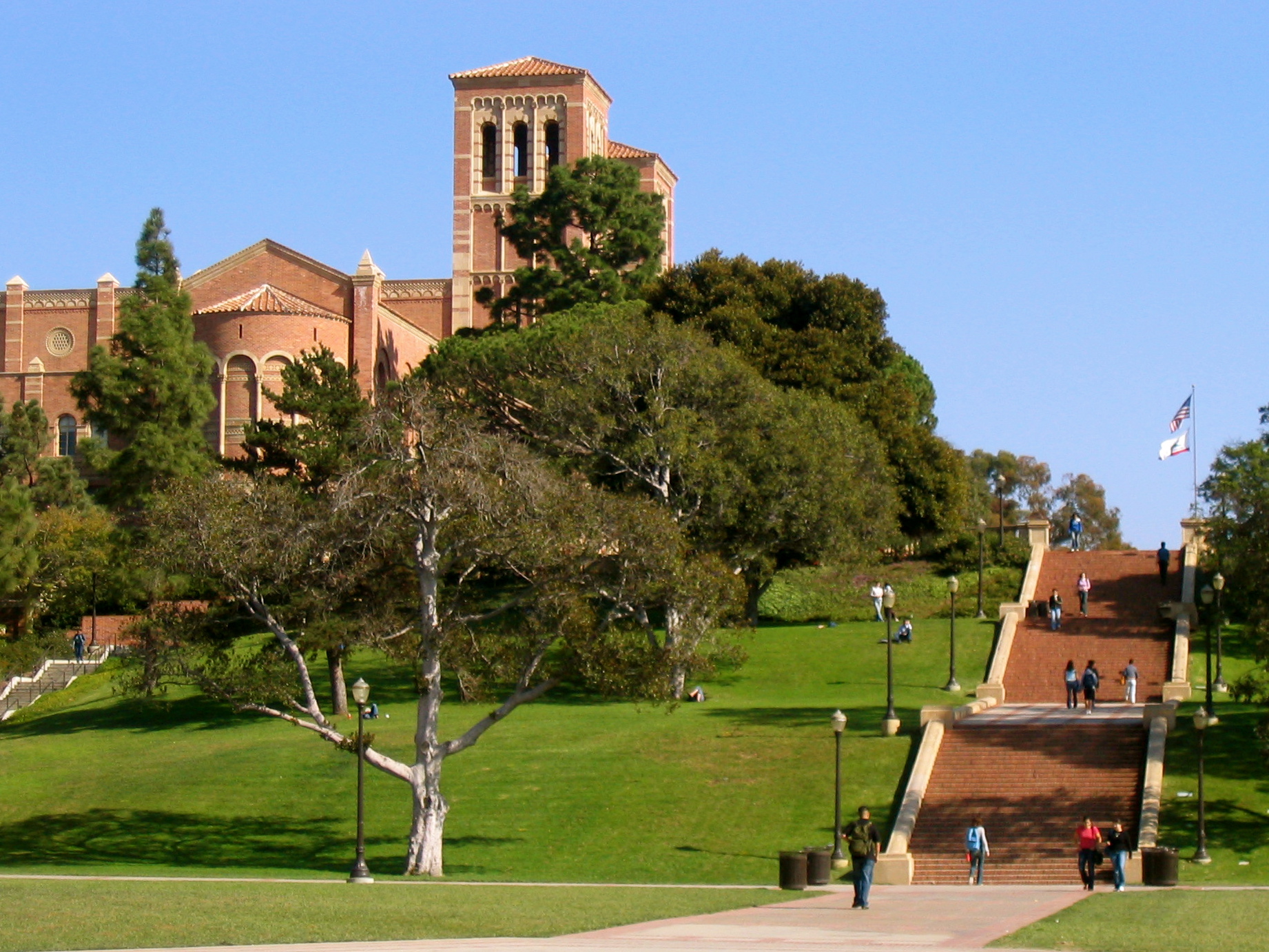
(Above: Janss Steps at UCLA--a great place for sprints!)


Finally, the much anticipated Grand Finale of the excellent interview series with Dr. Aaron Blaisdell, Professor of Psychology at the University of California, Los Angeles (UCLA).


Part I & Part II & Part III


KP = Kai Pottenger
AB = Aaron Blaisdell

KP: Have you learned anything with personal self-experiments that inform your research or potential research prospects?

AB: Not immediately. In the back of my mind, I have thought it would be interesting to look at the role of macronutrients in cognitive tasks that my subjects engage in. Since rats are one of the typical models of health outcomes, it would be interesting to apply it to a cognitive approach. It’s not what I am funded to do--but I do a lot of things I’m not funded to do. It just depends on how feasible it is and how interesting it would be to my community of comparative psychologists. It would be more interesting to the Paleo community. Also, it would depend on how feasible it would be to construct such diets. Everything I buy right now is off the shelf. I don’t know if I have the gumption right now to start doing all that. I have so many other really cool things lined up right now.


KP: Share a little about how you have integrated Ancestral Fitness into your lifestyle as a professor--exercise patterns, eating choices, etc.

AB: I basically do the Primal Blueprint type of exercise. I lift heavy objects a few times a week. I used to do weightlifting, pushups, isolation exercises. In the context of my old diet--cereal, pasta--I gained muscle mass slowly. Especially after having kids, it was totally derailed. In the context of my new diet, just working out two sessions a week, on average 15 minutes, with 2 or 4 exercises--push-ups, kettle bells--I have seen huge changes. I have always been a walker, especially at UCLA, a walking campus. I also found a place to do sprints in the quad in front of Janss Steps. The track is closed a lot at UCLA, so it’s hard to find a place to run. I do sprints every two weeks for 10 minutes. That keeps me in better shape physically even though I actually have scaled back from what I used to do. I work my quads in the quad.


KP: What ways do you see promise in altering nutritional choice architecture for people to help improve their health states?

AB: That’s a biggie. Umm … blow up all the conventional stores. I don’t know. Stuff has to be made readily available. It can’t be prohibitively expensive for the general public. The general public is watching bottom dollar. I see it in my house. My wife is Chinese and wants to buy the cheapest priced head of lettuce or chicken. I go to Whole Foods and get the free range, organic chicken, and my credit card bill shows it. Farmers markets or Whole Foods are much more expensive.

It would also have to work in the food industry--restaurants. If a restaurant fries something, they are using corn oil, and obviously such heavy lobby groups keep that in place. I don’t know what kind of forces need to overcome that. Like McDonald’s switching from beef oil to vegetable oil.

One, people have to have knowledge and awareness. Two, good stuff has to be readily available at the supermarket. Third, the price has to be comparable to the other stuff that’s on sale, otherwise they will avoid it.

That’s why I am interested in primal vending machines. It’s changing the choice architecture landscape. A campus like UCLA might have enough people knowledgeable enough to have a tipping point--as Gladwell would say.

We could make it convenient every hundred yards to dispense healthy options. I just picked up Taleb’s book. Looking through the prelude, he talks about the kinds of entrepreneurial ideas that tend to be most effective tend to be further out in prospective from the conventional wisdom. There is going to be fewer competitors. All the low hanging fruit from this paradigm is already taken so you find the low hanging fruit from another paradigm. This vending machine idea fits that description exactly. Nobody is thinking about it in these terms. It’d be fun--and I could make money.


KP: How did you find out about the epistemocrat blog?

AB: I know I had come across Brent’s name in the comment sections of the other blogs I follow like Whole Health Source and Seth Roberts’ blog. I am actually friends with Seth. We met back in 2004 at a conference. I always knew about his work. It was standard reading when I was a grad student. I met him, and he was talking about variability in rats when he was still a professor at UC Berkeley. It was directly related to stuff I was finding in the pigeons I was looking at, so I approached him about my ideas and how they were related to them. We struck up a friendship and a collaboration, and since then, he has started engaging in the Shangri-la Diet and other stuff. He didn’t have the blog back then. Then I started reading his blog and probably started reading Brent’s blog from there.

A final thanks to Kai and Aaron for connecting for this interview!

To good health,

Brent

Monday, November 9, 2009

Part 3: Interview Series with Aaron Blaisdell of UCLA

The much anticipated Part III ... and the plot thickens.


KP: In what ways does your research shape your perception of human foraging behavior in a modern ecology?

AB: The research I do in my lab doesn’t effect [it] too much. My research focuses on one omnivorous species, rats, and one granivorous species, pigeons (although they don’t just eat grains--they eat other stuff like meat, but they are primarily granivores). They are very different species than humans.

What's interesting is to read the medical literature that uses rats or rabbits to establish the diet research, like the lipid hypothesis for heart disease. I recognize that even an omnivorous animal like a rat still is very different. It's like a Venn diagram--there is some overlap because we are both omnivores to some extent, but rats are a very different type of omnivore. Rats don’t eat nearly as much animal product as humans have during their recent evolutionary history. They aren’t necessarily going to be the correct animal model--if there is any animal model for humans. I am more cognizant of that now. Two years ago, I would have looked at a rat study that said, for example, “Rats that consume more sunflower oil have more heart disease, giving evidence for the lipid hypothesis," but now, I have grown much more critical of conventional wisdom. I am much more aware that there is so much out there that we assume blindly. It's humbling.


KP: How do you weave the concepts of the paleo/primal community blogs into your public health message to students or to family?

AB: Well, with my family--I have a four-year-old and a one-year-old--I have tried to change their diets. I have only been embarking on this adventure for two years. At that time, my four-year-old was two. We had already gone through the progression of introducing foods like rice cereals, then other cereals, then some vegetables and fruits--meat came a little later--and then whole grain crackers, whole grain cereal. And now she is addicted to all that stuff.

Now, I have given all this stuff up, and I feel ten times better, but try arguing with a four-year-old that she should have an egg instead of her gold fish crackers. It's very difficult because there is an addictive quality to the carbohydrates.

My wife gets on my case about preaching too much, so there is a balancing act between being happily married and how far we are going to go. Raw milk was a battle for awhile. I was able to get her to allow me to drink it myself and give it to my four-year-old. So there are some strides. I hide fish oil--fermented cod liver oil that smells and tastes terrible--in the kids' yogurt with some chocolate powder. At first, my wife was skeptical, but she has finally come around on it.

I have also been starting to bring this stuff up in my classes. I have been talking about it in my laboratory for a long time. Last fall, a year ago, I thought I really needed to get this message across. My students, to a large degree, are pre-med. I figured that I have an opportunity, if not an obligation, to at least open their minds against the conventional wisdom and clamped dogmatic mindset. I will keep doing that.

I have actually toyed with the idea of teaching a seminar on the paleo lifestyle approach. We would go through the blogs and pick key examples, maybe even use the Primal Blueprint as the text, and dig into the primary literature here and there. It would be an initial starting point to help students navigate and make their own decisions.

I have lab meetings once a week--I still bring donuts. I still have one [donut] once a week. I figure it's like Mark Sisson's 80/20 rule. It might be sacrilegious in some circles, but that’s OK.

Again, thanks to Kai and Aaron for this wonderful series.

Stay tuned ...

Leave questions for Aaron in the comments section of this post; he will respond.

To good health,

Brent

Monday, October 12, 2009

Part 2: Interview Series with Aaron Blaisdell of UCLA

In the first installment of this fabulous series, I left you hanging on the edge of your seat by ending mid-question-answering, making you itch for more with the epistemocratic Dr. Blaisdell.

Well, here you go; on with the show ...


KP: In what ways does your research inform your personal health mythology or strategy?

AB: ... A naive observer, someone like a martian or a bushman, if they saw a barometer change and the weather change, they might become superstitious and begin doing a rain dance and think, "Oh, this event causes that; my crops are doing well, and it would be really nice if that watering hole wasn't drying up to get the animals back. Let's tamper with that barometer." That would be an error in a purely associative way to derive cause and effect relationships because actually the two things are both events of the common cause that that particular individual didn't know about, but the scientific method allows us to discover hidden causes in our world by manipulating events. We do this through experiments. Say we thought that the causal model was what I initially came up with; that the barometer is causing changes in weather. I am going to tamper with the barometer. Doing that experiment, you are going to discover that is doesn't cause changes in the weather. So you have to give up that causal model and think about what other causal models might actually be more accurate. Well, maybe there is a common cause. So we know about those common causes.

It's through science and manipulation, what we call intervention: you intervene on one variable, and if it effects another variable every time you do it, then you grow in your confidence that event A is a cause of event B. But, if you find that you manipulate event A and it doesn't effect event B, maybe they are correlated because of some other causal structure.

Can rats think like that?

Most people would assume not. Maybe through instrumental learning can they discover cause and effect relationships. But can they, before they even have a chance to intervene on something, entertain the idea that two events are correlated because of the common cause—that's what I set out to test and actually showed evidence of in rats.


KP: Is this similar to Taleb's idea of tinkering?

AB: Yeah, all these things are really playing with similar ideas—how we glean information and how we think about what we don't know.

So, some of the foundations of tinkering: it's not just instrumental learning, trial-and-error, but maybe, as Popper said, he wanted his hypotheses to die in his stead. Maybe mental tinkering [BP's note: I call this thinkering], before you actually physically tinker, allows you to throw out, depending on your model or mythology you are coming from, some bad hypotheses before you can try out some of the better ones. Rats have some of this.

To get back to *the rat study—it's very simple actually. What I did is: I had the rats learn that a light, a little flashing light in a Pavlovian box, is followed sometimes by a tone and sometimes by food. So they might have used Pavlovian conditioning; just as I said, Pavlovian conditioning might be the substrate by which animals learn to piece together spatial maps and maybe causal maps as well. If they treat the light as a common cause of the tone and of food, they see [hear] the tone and they predict food might happen. Just like if you see the barometer drop then you think, "Oh, the storm might happen." But, if you see someone tamper with the barometer and you know that the barometer and the storm aren't causally related, then you won't think that the weather is going to change. So, the question is, if the rat intervenes to make the tone happen, will it now no longer think the food will occur.

So there were a bunch of rats; they all had the same training—light as an antecedent to tone and food. Then, at test, some of the rats got tone and they tended to go look in the food section. So they were expecting food based on the tone—which humans would says is a diagnostic reasoning process. “Tone is there because light causes tone and light also causes food. Oh, there must be food.” Or, it's just second order Pavlovian conditioning. The critical test was with another group of rats that got the same training. We gave them a lever that they had never had before. They were in this box, and they have a lever that is rigged so that if they press the lever the tone will immediately come up. So now the question is, do the rats attribute that tone to being caused by themselves. That is, did they intervene to make that variable change? If they thought that they were the cause of the tone, that means it couldn't have been the light, therefore the other effects of the light, food, would not have been expected. In that case, the intervening rats, after hearing the tone of their own intervention, should not expect food. Indeed, they didn't go to food nearly as much. That is the essence of the finding and how it fits in with this idea of causal models and how we go about testing our world.

That has changed how I have been looking at the world—the way I look at this whole nutritional lifestyle change that I have been going through—it's kind of a metamorphosis as I go through all these blogs and stuff. I am tinkering with these ideas myself. I am realizing that I am more cognizant of the fact that I am creating causal models. Now, when I am entertaining a hypothesis, I am doing so through this kind of system of spinning ideas: "Is this the right mix or is that?" Then you can go on and test it through self-experimentation, trying to discover variables that are related causally and others that are not related causally. That's a very powerful tool.

Is there a specific example of a personal change that happened through this causal model?

I have followed a lot of the knowledge of grains being inflammatory. I have cut grains almost entirely out of my diet. I have lost a lot of the key inflammatory markers. My gums no longer bleed when I floss them. I have had confirmation of my hypothesis that I have gleaned from the internet. My belt size went down a notch. Don talked about this on Primal Wisdom: When he and others used to eat a lot of carbs, they'd feel bloated; they'd loosen their belts. I used to chalk it up to, "I just ate a lot; my stomach is bigger." That's a natural hypothesis; you think in terms of cause-and-effect: Stomach is bigger; it's basically a bag that stores food; so, you loosen your belt. But, now, I can eat as much as I want of meat and stuff, as long as it doesn't have grains or bad fats, like industrial oils. I don't get the inflammatory response anymore. I threw out one hypothesis that is more consistent with another one.

As Aaron shares, the best we can do is be humble, tinker, and live each day by our yet-to-be-falsified personal ('n=1') mythologies, positioning ourselves to seize positive Black Swan opportunities--chance favors the prepared mind--while clipping our exposure to negative Black Swan strikes: it's perceptive optimism in action (thanks to Dave Lull).

At some point, it is inevitable: we will have to re-edit the stories that we tell ourselves, as Aaron has done; we will have to let go of those falsified components of our narratives.

Sometimes, this can be quite challenging; but, the longer we wait, the more challenging it will become.

This is the process of becoming a Mythocrat, the Sophiological friend of the Epistemological Epistemocrat. They're two kindred, complimentary archetypes.

Epistemocracy and Mythocracy combine to form a dynamic 'united duad' for interdisciplinary inquiry into the human condition; it's simply reflection about, as Aaron said, "how we glean information and how we think about what we don't know."

Again, please leave any questions or remarks for Aaron in the comments section of this post, and he will respond promptly. He's awesome that way.

Please tune in again soon for Part 3 of this wonderful Interview Series.

Thanks again to Kai and Aaron: cheers!

To good health,

Brent


*Here's his abstract, by the way:
Causal Reasoning in Rats

Aaron P. Blaisdell (1*), Kosuke Sawa (2), Kenneth J. Leising (1), Michael R. Waldmann (3)

Empirical research with nonhuman primates appears to support the view that causal reasoning is a key cognitive faculty that divides humans from animals. The claim is that animals approximate causal learning using associative processes. The present results cast doubt on that conclusion. Rats made causal inferences in a basic task that taps into core features of causal reasoning without requiring complex physical knowledge. They derived predictions of the outcomes of interventions after passive observational learning of different kinds of causal models. These competencies cannot be explained by current associative theories but are consistent with causal Bayes net theories.

1 Department of Psychology, University of California, Los Angeles, CA 90095, USA.
2 Japan Society for the Promotion of Science, Nagoya University, Nagoya 464-8601, Japan.
3 Department of Psychology, University of Göttingen, 37073 Göttingen, Germany.

* To whom correspondence should be addressed. E-mail: blaisdell@psych.ucla.edu

Friday, October 9, 2009

Part 1: Interview Series with Aaron Blaisdell of UCLA


Part I

My bright brother, Kai Pottenger, a graduate from UCLA with a degree in Neuroscience and an interest in financial decision-making under uncertainty from a cognitive psychology perspective (think heuristics and biases of the Kahneman type), recently interviewed Aaron Blaisdell, a Professor of Psychology at UCLA and an ardent Ancestral Fitness practitioner.

Dr. Blaisdell can be spotted on campus proudly sporting his Vibram Five Fingers shoes or doing primal sprints in Wilson Plaza. Every day, he puts 'Theory to Practice' as as an active epistemocratic academic--a scientist and a professor--at one of the top research universities in the world.

I invite you to learn more about his lab and research here: Blaisdell Lab.

During this series, please leave questions for Aaron in the comments section, and I am sure Aaron will respond promptly and insightfully.


KP = Kai Pottenger
AB = Aaron Blaisdell


KP: Briefly share your research interests and one or two projects you are currently working on.

AB: Well, I am basically interested in animals. I want to know what makes them, including us, tick. The framework I take is a cognitive framework, and I think it's a really great heuristic by which to ask questions: what are animals doing and what do they think about the world? So, kind of early on in my studies, I came along the idea of representation, like cognitive maps and evidence that animals can hold cognitive maps of their environments. That was the beginning of what sparked my interest. I have always loved animals. It was natural for me to start looking at them from that cognitive perspective, and it has carried through to my research to this day. I got trained in the mechanistic level of Pavlovian conditioning. Those are really great tools to probe the mind of the animal and the human. So, I use Pavlovian conditioning techniques to ask how animals, specifically pigeons and rats, represent the world. What kinds of representations do they show evidence of acquiring and using--of course, their world in my laboratory is a little bit more minimal.

I always liken it to the chemistry approach, where instead of studying chemical reactions in the world where things are very messy, I bring it into the lab where I can isolate a lot of factors, hold them constant, and really manipulate much more cleanly those particular variables that I am interested in to see what that tells me about the underlying processes. Presumably, that would scale back into the more ethologically relevant context. That's always a question. Even though I don't do ethological research myself, I think it is very important to bring these questions into the real world. I have talked to ethologists and such and there are definitely people who do the in-between work--they go between lab and real world. But I use the lab as a chemistry approach to looking at representations.

Actually, I study cognitive maps. Do pigeons acquire spatial recognition of the world, and if they do, how do they and how do they use it? Some of my evidence from pigeons is that they do seem to acquire spatial representations of the world, like something out there is related to something else out there--that's a spatial relationship. I have some evidence that some of the simpler mechanisms like Pavlovian conditioning is one of the mechanisms used to bind together the spatial representations. So, there is kind of an interface between or building on top of level, which is very interesting. A lot of cognitive scientists think this way too. There are simpler levels that have been built in from evolution, like simple learning processes, and then those can be the foundation upon which cognition works. That's kind of the approach I am taking, the interplay between lower and higher cognitive levels.

KP: In what ways does your research inform your personal health mythology or strategy?

AB: There are specific questions that I ask. There is another line of work that maybe has been more influential in those terms--my work on causal reasoning. I had a paper come out in Science in 2006, and it showed evidence that rats display a certain type of causal reasoning. That's something people thought rats couldn't do. I'll give you an example of a basic way humans reason this way and the paradigm example, and then I will work my way back to the rats. So, we understand how barometers work. A barometer's reading goes up or down, and it's very closely correlated with the weather. When the pressure increases, we expect that the weather will get nicer, sunnier ... whereas, if we see a sudden drop in the barometer level, we anticipate an impending storm coming through. Those two events are correlated, but they share a common cause. They are both effects of a common cause. We can use one to guess about the other because they are very tightly correlated. And this is what David Hume said is how we learn about cause-and-effect relationships: we see "constant conjunction" (his words) of events. We associate things that go together--that change together--and this associative learning process allows us to infer cause-and-effect relationships. But there are situations where that inferential approach breaks down; exactly in the case where two things are correlated, related not because one is the cause of the other, but because they are both effects of another common cause. So, before we had the ability to come up with ideas about air pressure and before we had the ability to invent barometers to detect it, we didn't realize that there was this cause-and-effect relationship.

Stay tuned, my friends, there are more gems to come ...

Thanks again to Kai and to Aaron for connecting for this interview.

Comments and questions welcomed.

To good health,

Brent